
Contractor exams are challenging because they test more than what you know: you must find, interpret, and apply information under pressure. Learning how to pass a contractor exam starts with focused study, timed practice, and a clear review of every missed question. The goal isn’t to memorize everything. It’s to build a reliable approach to exam questions and become comfortable finding the right information quickly.
It’s natural to wonder how difficult the exam will feel, especially when the format and reference materials are unfamiliar. A structured plan makes preparation more manageable. Organize your study, practice against the clock, and learn to work through questions on test day. If you need to retake the exam, use your score report to target weaker areas. Take it one step at a time and turn a daunting test into a practical plan.
Key Takeaways
- Build a focused study routine with exam guides, timed practice, and a review of every missed question.
- On test day, keep moving through the exam: answer what you can, flag difficult questions, and return to them later.
- Expect the challenge to involve finding and applying information under pressure, not just recalling facts.
- Review the experience requirements for your state and use any score report to target the topics that need more work.
How Do I Study for a General Contractor Exam?
A practical plan for how to pass a contractor exam starts with your jurisdiction’s exam guide, consistent study sessions, and targeted practice. Keep application preparation separate from studying so each task gets focused attention.
-
Choose a Suitable Study Environment
Choose a quiet place where you can read, take notes, and work through practice questions without interruptions. Keep your exam guide and reference books nearby. Before each session, silence notifications and clear away unrelated tasks. If home is noisy, find another calm setting. Use the same setup for timed practice so it feels familiar and helps you focus.
-
Create a Realistic Study Schedule
Schedule regular study sessions around work and family commitments, then assign each one a topic or task. For example, review a chapter in one session and answer questions on it in the next. Track completed topics and missed questions in a simple log. Mark progress with a short break or a completed weekly goal. If you fall behind, adjust the plan rather than abandoning it.
-
Use Examination Study Guides
Start with a study guide that matches your license exam and jurisdiction. California’s CSLB provides study guides to help applicants prepare. Use the guide to organize topics, then practice applying the information instead of only rereading it. If you retake the exam, review your score report and focus on weaker subjects. A clear record of missed questions can help you choose what to review next.
-
Review Exam Topics and Post-Pass Requirements
Use your exam guide to identify subjects and reference materials relevant to your license classification. Contractor exams test how you find, interpret, and apply information, so practice using the materials rather than only rereading them. After passing, licensing authorities explain remaining license-issuance steps. In California, CSLB guidance outlines what applicants need to submit. Understanding these separate stages helps you plan how to pass a contractor exam and prepare for what follows.
Exam-day question and time-management strategies
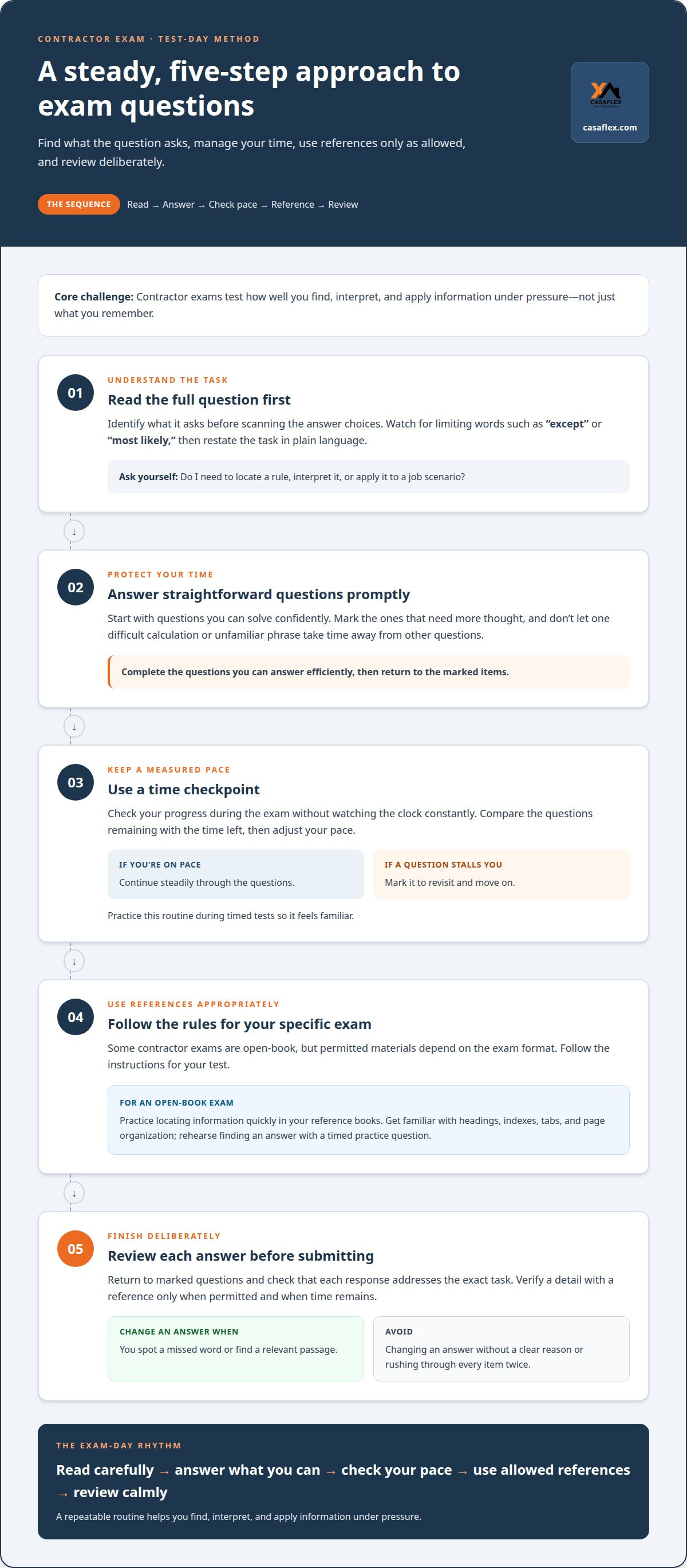
Contractor exams test how well you find, interpret, and apply information under pressure. Use a repeatable approach for each question, and keep your pace steady.
- Read the full question first. Identify what it asks before scanning the answer choices. Notice limiting words such as “except” or “most likely,” then restate the task in plain language. For example, determine whether the question asks you to locate a rule, interpret it, or apply it to a job scenario.
- Answer straightforward questions promptly. Start with items you can solve confidently and mark questions that need more thought. Don’t let one difficult calculation or unfamiliar phrase take time away from other questions. Return to marked items after completing the ones you can answer efficiently.
- Use a time checkpoint. Check your progress during the exam without watching the clock constantly. Compare the questions remaining with the time left, then adjust your pace. If a question stalls you, mark it to revisit and move on. Practice this routine during timed tests so it feels familiar.
- Use only permitted reference materials. Some contractor exams are open-book, but what you may bring depends on the exam format. Follow the instructions for your specific test. For an open-book exam, practice locating information quickly in your reference books before test day. Familiarize yourself with headings, indexes, tabs, and page organization, then use a timed practice question to rehearse finding an answer.
- Review each answer before submitting. Revisit marked questions and check that your response addresses the exact task. Use a reference to verify a detail only when permitted and when time remains. Avoid changing an answer without a clear reason, such as spotting a missed word or finding a relevant passage. Calm, deliberate review is more useful than rushing through every item twice.
General contractor exam difficulty
Exam difficulty depends on more than how much information you remember. Break it into specific demands: understanding the question, choosing a method, and using approved references when allowed.
- Separate recall from application. A question may ask for a rule or present a job scenario and ask what the rule means in that situation. During practice, label each missed answer: you didn’t know the fact, misread the wording, or couldn’t apply the information. That diagnosis shows what to work on instead of treating every wrong answer alike.
- Notice where switching topics slows you down. A practice set may move between areas such as business procedures and project-related decisions. After each set, note which topic changes caused hesitation. Then review those transitions deliberately, such as moving from a question about planning work to one about business records.
- Test your understanding without relying on familiar wording. Rereading a highlighted passage can feel easy because the material looks familiar. Close the book and explain the idea in your own words, then answer a question using a different example. If you can’t explain it, return to the topic and identify the missing link.
- Distinguish a knowledge gap from a navigation problem. In an open-book exam, a correct answer may depend on finding the right passage efficiently. Practice locating a topic through the index or headings, then explain what the passage means. If you find it but still can’t answer, focus on interpretation rather than searching.
- Use evidence to judge readiness. Don’t measure preparation by hours studied or pages read. Review practice results and group errors by cause and subject. Repeated mistakes in one area call for targeted review; scattered errors from misreading call for more careful question analysis. This gives you a concrete next step and makes the exam’s demands easier to manage.
What are the eligibility requirements to take a contractor exam?
Eligibility depends on the licensing authority and the license classification you plan to pursue. Use these steps to identify the experience criteria and prepare an accurate application.
- Start with the licensing authority for your jurisdiction. Find its contractor examination guidance and identify the application route for your intended license. Requirements can differ across jurisdictions and classifications, so don’t rely on another state’s checklist. For California applicants, the Contractors State License Board (CSLB) explains what experience qualifies for the contractor examination.
- Match your work history to the stated experience criteria. Write down your roles, tasks, and periods of work, then compare them with the authority’s description of qualifying experience. For example, distinguish hands-on project duties from general business tasks. Keep the description accurate and specific; a job title alone may not show what work you performed.
- Gather records that support your account. Organize relevant employment or project details before starting the application. Use consistent names, dates, and descriptions across your forms and supporting documents. Follow the licensing authority’s application instructions to identify what to submit. Avoid claims your records cannot support.
- Review the application before submitting it. Check that the selected classification matches your intended work and that each required field is complete. Compare your experience description with the authority’s qualifying criteria. In California, CSLB guidance explains the original examination application process and what happens if an application is returned for correction. Correcting inconsistencies early can help prevent avoidable processing delays.
- Keep eligibility separate from exam preparation. Meeting experience criteria addresses whether you may apply; studying addresses how you handle the exam. Make a simple checklist with two columns: application tasks and study tasks. Complete each using the relevant official instructions and exam materials. Once you understand your eligibility path, prepare with a focused exam study plan that supports your next step.
Choose the license classification that matches the work you intend to do, then review your jurisdiction’s licensing authority guidance for the application route and requirements. These can vary by jurisdiction and classification.
Casaflex: Highlighted Study Books
Casaflex offers Highlighted Study Books to help you focus your exam preparation on the material you need to review. Use them alongside a study schedule: read a topic, pause to recall its key points, then revisit sections that remain unclear. Realistic Practice Exams can help you apply that knowledge through exam-style practice and review your answers to spot areas needing more attention. These tools are a practical next step when you’ve identified what to study and want structured materials for the work ahead. Keep your licensing authority’s exam guidance in view as you prepare, since the exam format and requirements can vary. Ready to continue building your study routine? Visit casaflex.com to explore Casaflex’s exam preparation materials.
Turn Your Preparation Into a Clear Next Step
Knowing how to pass a contractor exam is one part of moving toward your license. The next step is choosing study support that fits the exam you’re preparing for and the way you learn best. Casaflex offers Contractor License Exam Prep Courses, NASCLA Accredited Exam Prep, and Highlighted Study Books to support focused preparation. Choose a structured course if you want guided study, or use highlighted books to work through key material at your own pace. Keep your licensing authority’s exam requirements central as you decide what support will help you stay organized and prepared.
Make your next move practical. Identify the exam you’re preparing for, note where you want more structure, and explore the available study options. Contact Casaflex to discuss your exam preparation. A clear plan and steady effort can help you approach the next stage with confidence.
Frequently Asked Questions
What are the best study guides, courses, and practice tests for contractor exams?
The right study materials match your license classification, jurisdiction, and exam format. Choose a guide that follows the topics and references named in your exam materials, then use practice questions to find gaps rather than simply rereading. A course can add structure if you need help organizing your preparation. For open-book exams, focus on practice that builds fast reference navigation, not memorization alone.
How many questions are on the exam, how much time is allowed, and what score is passing?
The question count, time limit, and passing score depend on the specific exam and licensing authority. Find all three in your exam instructions, and note whether the time applies to the full test or separate portions. To plan your pace, divide the available time across the questions, leaving room to review. Don’t use figures from a different license classification.
What topics and subjects are covered on the contractor exam?
The exam covers subjects tied to the license classification, including business procedures and project-related decisions. It tests how well you find, interpret, and apply information, not just recall facts.
What are common reasons applicants fail or have their contractor license application denied?
Candidates may struggle with knowledge gaps, misreading questions, applying information, finding references quickly, or managing time. Application issues can include incomplete fields, a mismatched classification, or inconsistent or unsupported experience details. These may require correction and cause processing delays.


